 Roman Klimenko
How many words I learned in a year
Many Danish adults have a vocabulary of about 50,000 to 70,000 Danish words. A child in first grade knows about 5,000 to 10,000 Danish words.
One year ago, on September 9, 2017, I started a daily habit. Every day since then, without holidays or breaks, I have learned new Danish words.
To do this, I wrote a simple app that shows me a random Danish word. I then try to recall its meaning:
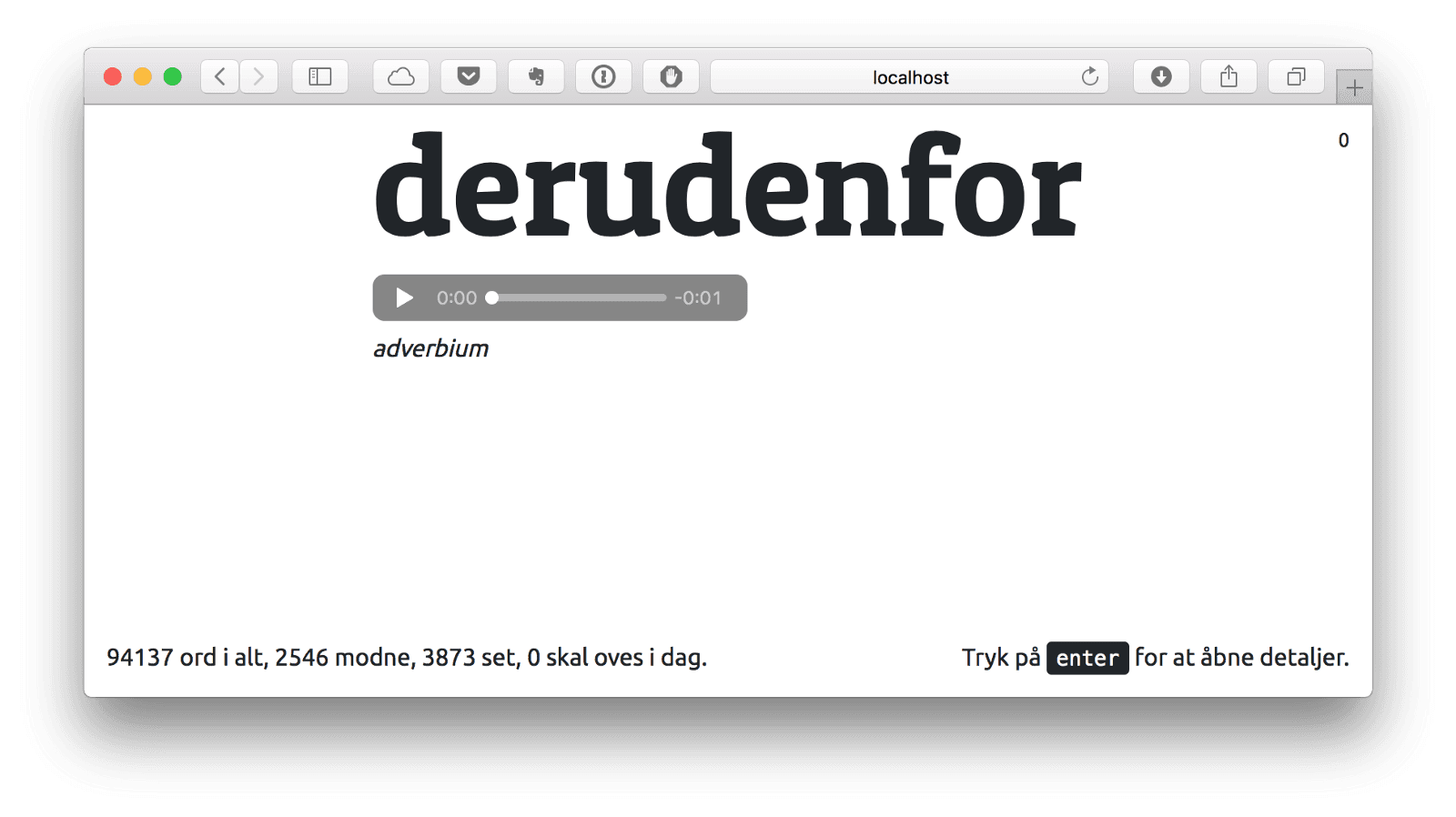
Then I open its description and check whether I remembered it correctly:
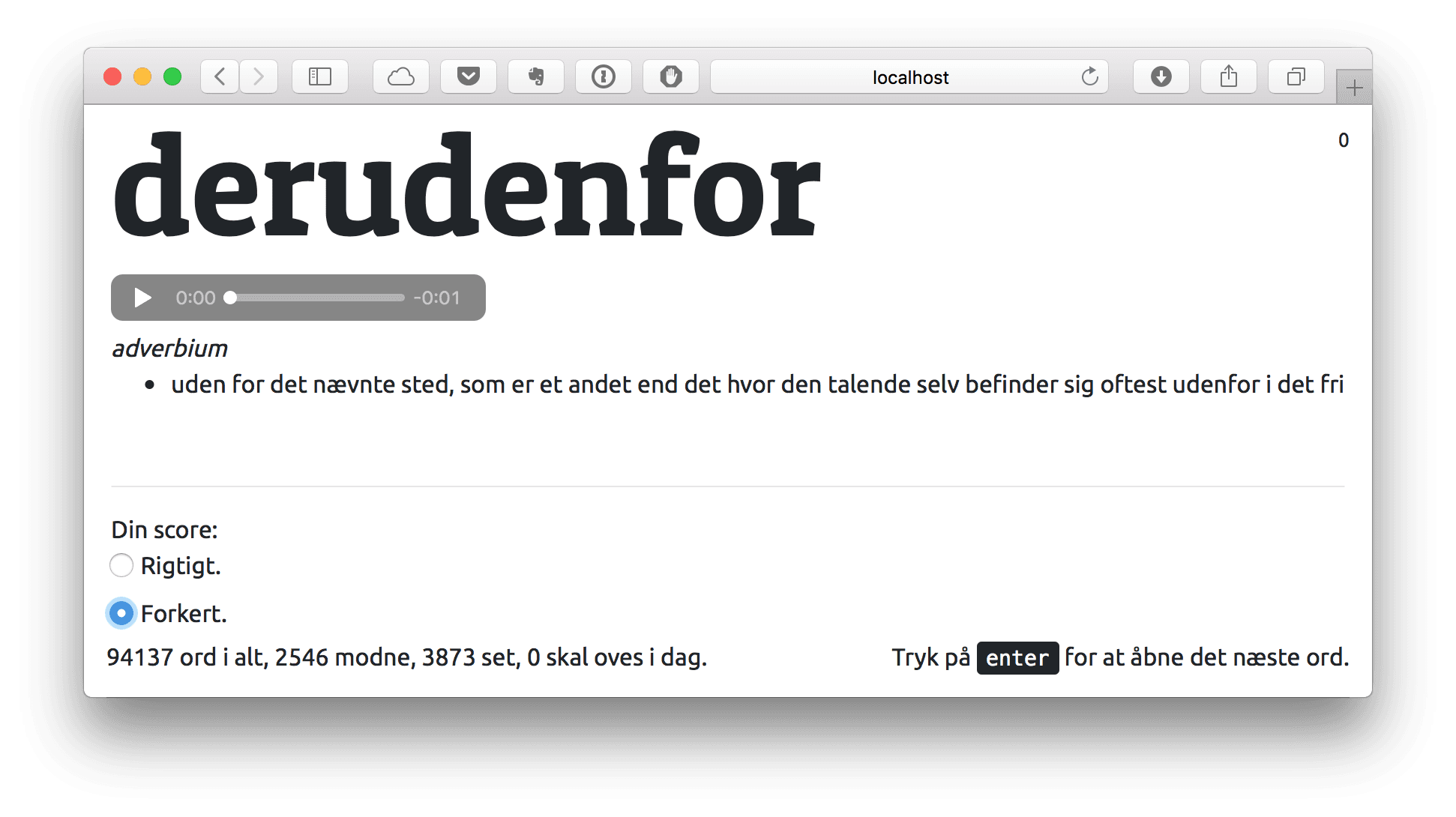
If I remember it correctly, the app schedules the word for another review in several days. The more often I remember the meaning, the longer the interval before the next review. I use the Fibonacci numbers to calculate the next date.
If I forget the meaning, I reset the number of successful reviews and repeat the word later that day.
This technique is called spaced repetition. A popular algorithm in this area is SM2, from an early version of SuperMemo. SM2 works much like my Fibonacci-based approach, so I stuck with the latter.
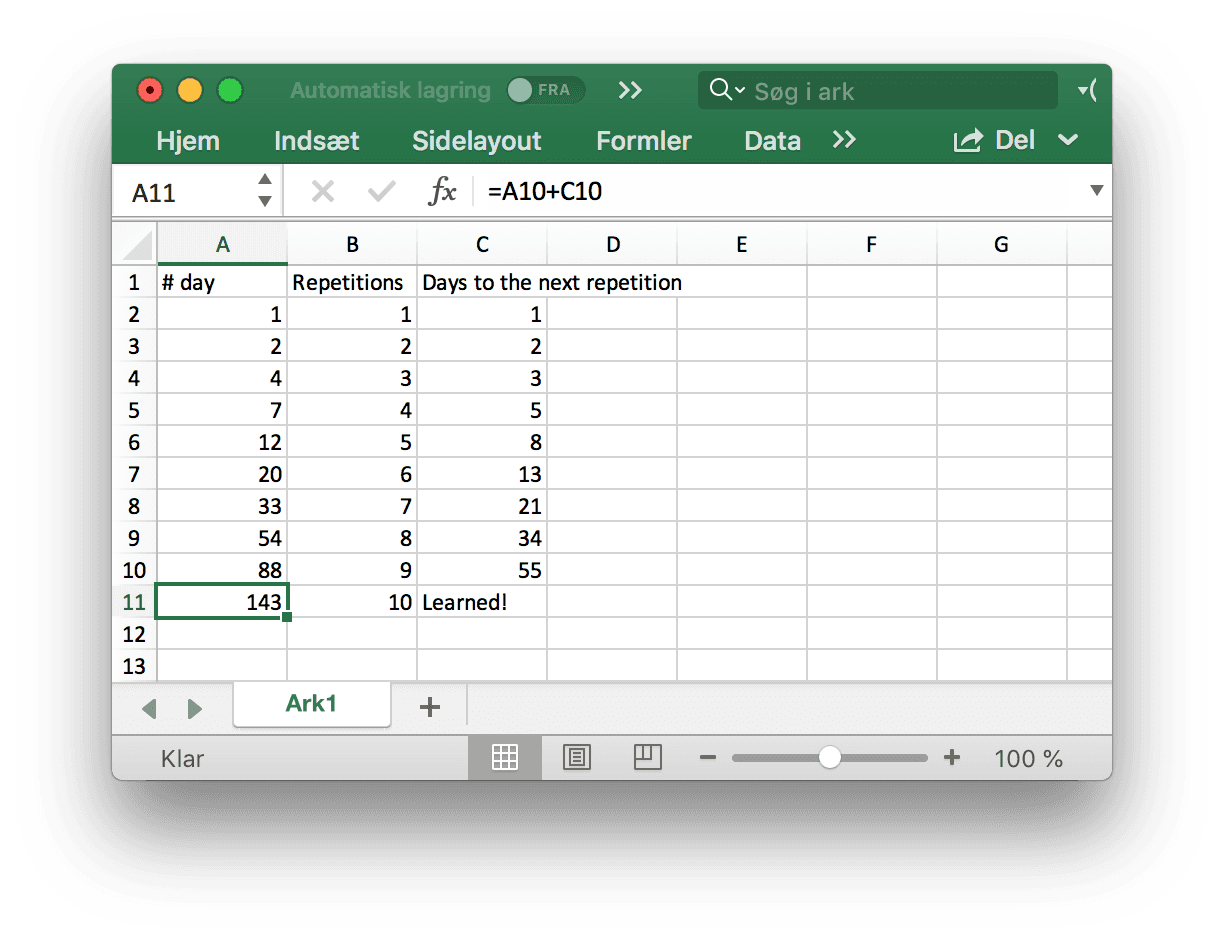
I also limited the number of reviews to ten. After the tenth successful review, a word counts as learned and never appears again. With Fibonacci numbers, that tenth review falls on the 143rd day after the first one:
And so here I am:
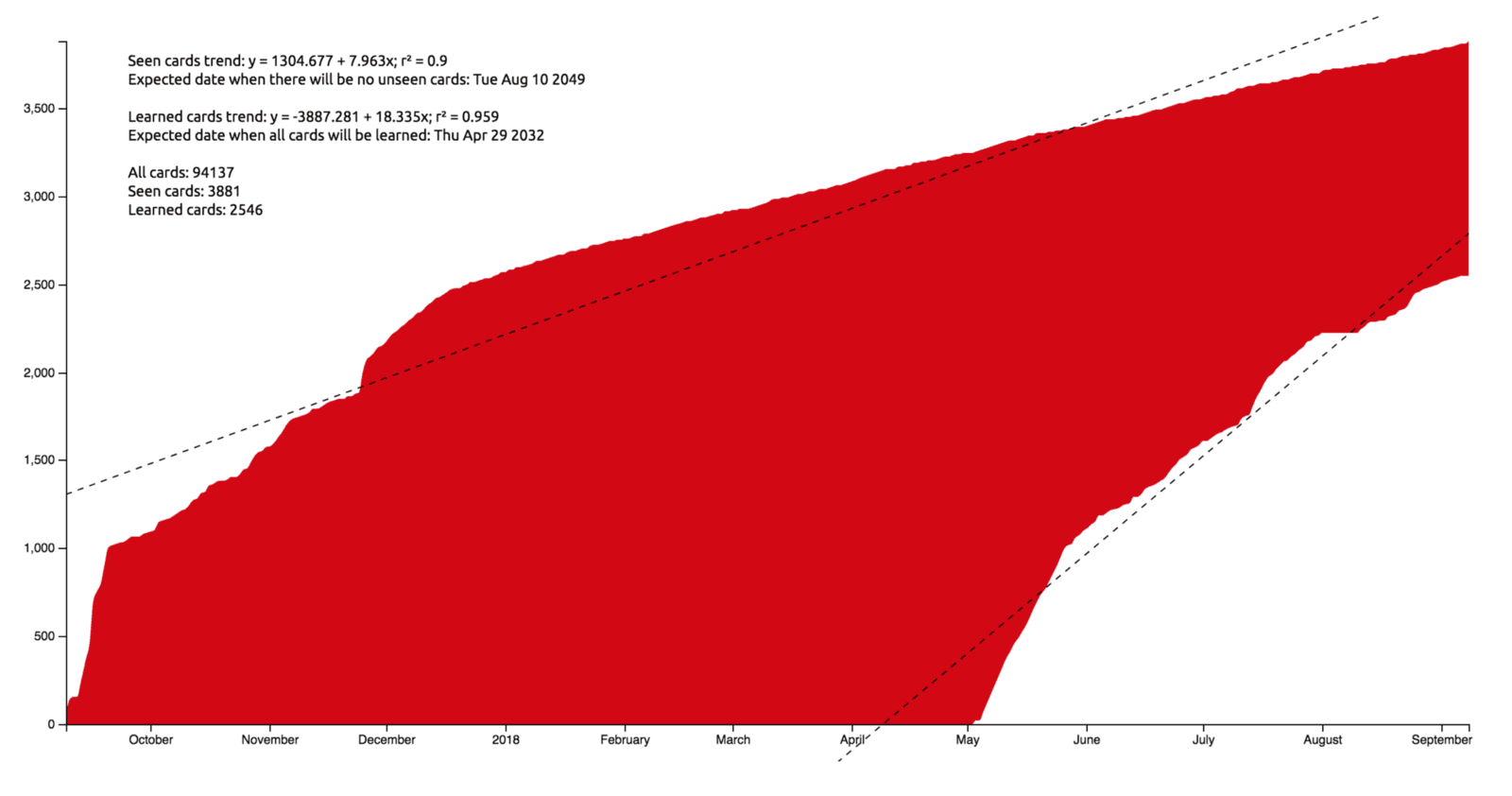
The dictionary I use contains 94,137 Danish words.
In one year, I have seen 3,881 words and learned 2,556 of them.
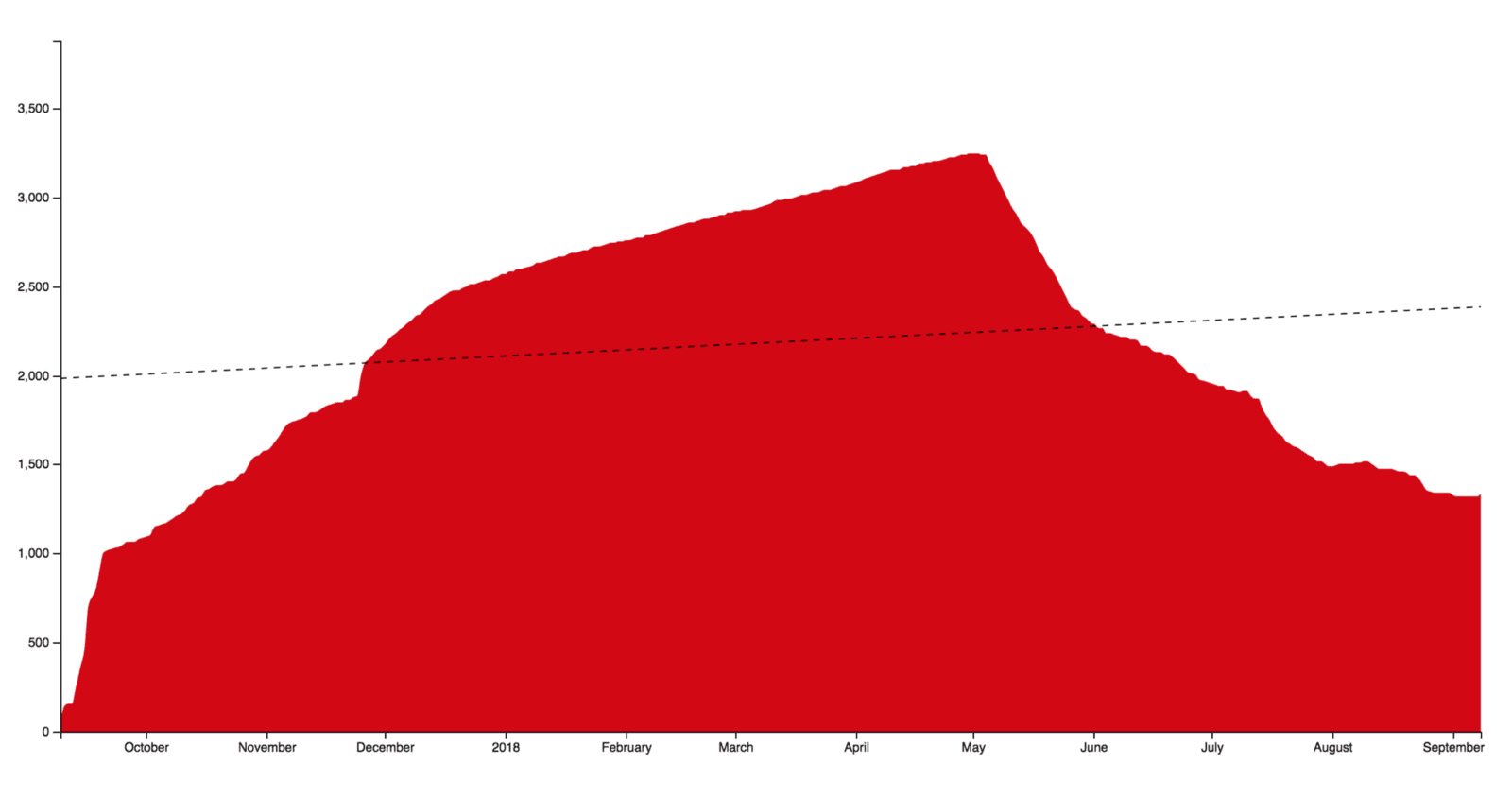
Here is how my learning progressed. The top edge of the red area shows the words I had seen, and the bottom edge shows those I had learned:
Here is how the size of the “working set” (seen minus learned) changed over time:
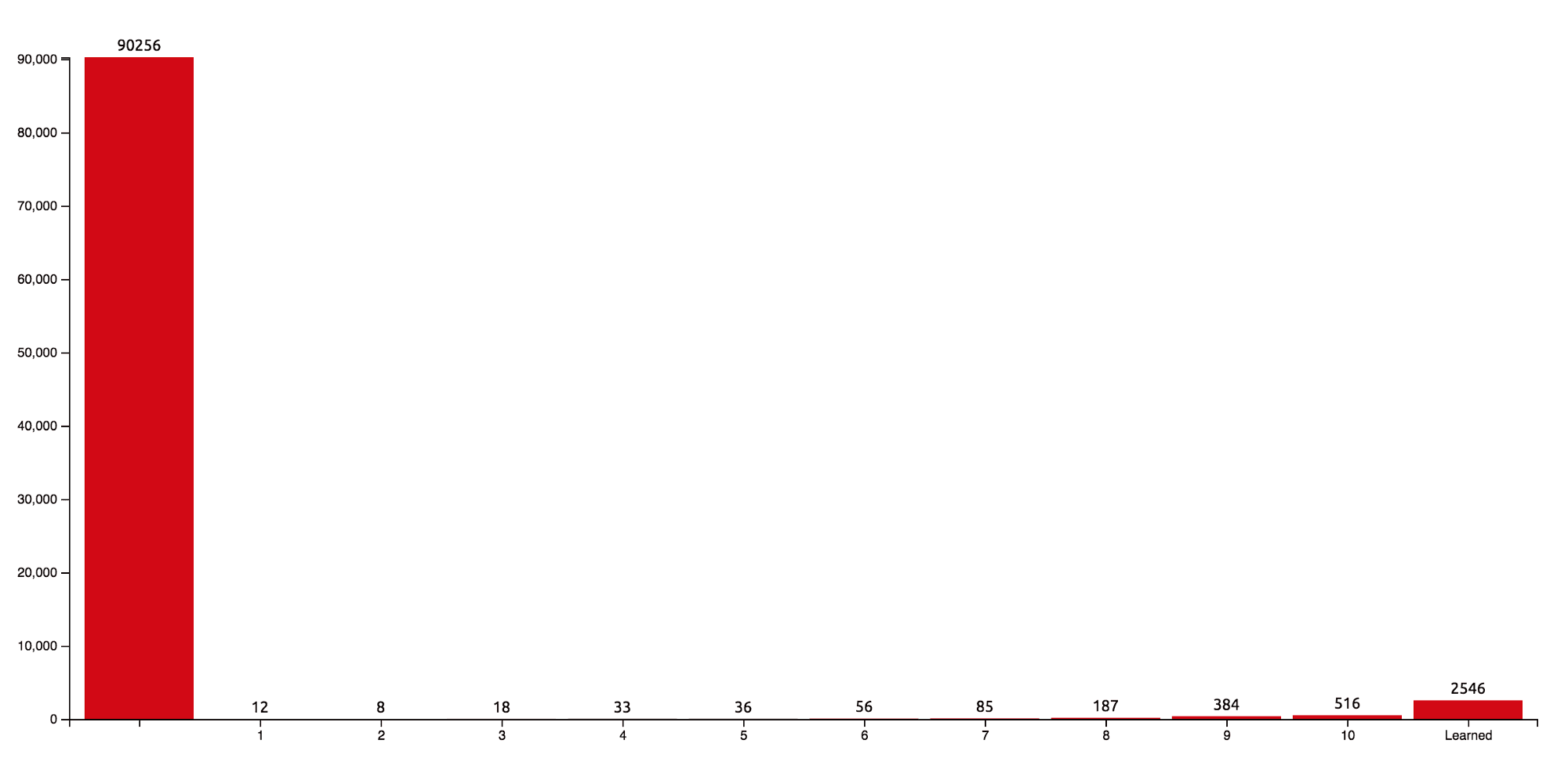
This chart shows the distribution of review counts across all the words in my database:
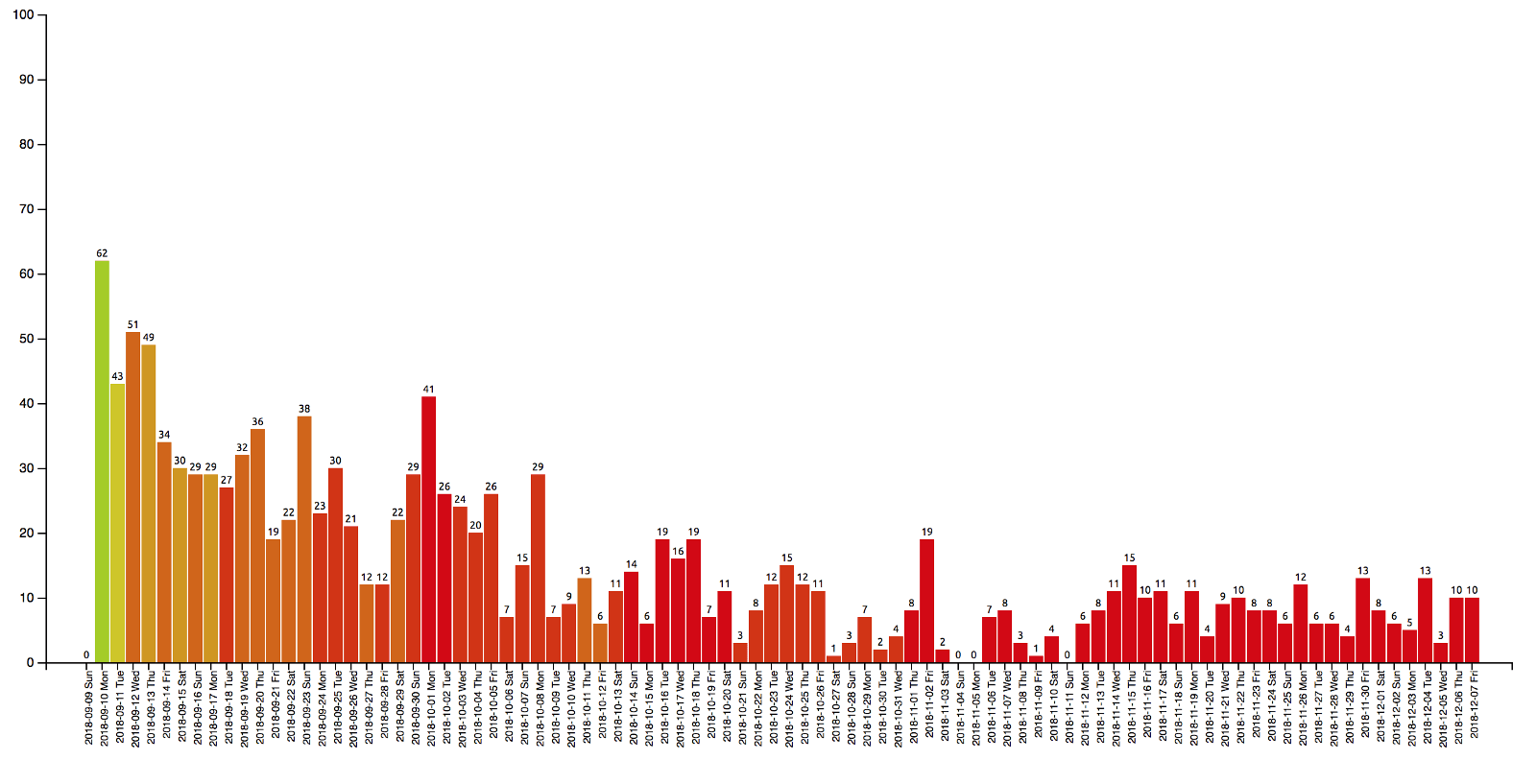
And here is the current number of words scheduled for each day. Greener days contain words with fewer successful reviews on average:
Next, I plan to consider word frequency so that common words appear more often.